
The complete guide
- Free standard delivery on orders of $100 or more
- Robotics, science and maker kits
- Delivery in 5 to 7 days after processing
- Customer support 7 days a week
Save $20

Children's Microscope Kit | Science Microscope for Children | Beginner Microscope Kit
Children's Microscope Kit
$109
$129
Save $20
- Up to 1200x
- 45 degree viewing angle
- Metal construction
- Accessories included
Price: $109 $129
- Handling: 24 to 48 hours. Delivery: 5 to 7 days.
- Free delivery across Singapore on orders $100+, otherwise a flat $25
- Pay by card or PayPal, handled by the payment provider
- Change-of-mind returns within 15 days of purchase require original packaging and proof of purchase. A $39 deduction applies per order; original delivery charges are excluded and return postage is paid by the buyer. Eligible cancellations carry a 12.5% processing fee. This does not limit rights that cannot be excluded under applicable law. Full returns policy
Explore other kits
Product specifications
| Maximum magnification | 1200x |
|---|---|
| Viewing angle | 45 degrees |
| Body | Metal |
| Included | Prepared slides, blank slides, tweezers, collection tools |
Shipping & returns
Standard delivery is S$25, or free from S$100 after discounts. Express Delivery is S$25. Allow 24 to 48 hours for processing and 5 to 7 days for delivery; no separate express arrival date is guaranteed.
Change-of-mind returns within 15 days of purchase require original packaging and proof of purchase. A $39 deduction applies per order; original delivery charges are excluded and return postage is paid by the buyer. Eligible cancellations carry a 12.5% processing fee. This does not limit rights that cannot be excluded under applicable law.
Refunds are processed within 24 to 48 hours after receipt of the returned item, subject to the return assessment; payment-provider processing can take longer.
If it arrives faulty, damaged or not as described, we put it right at no cost to you under the consumer guarantees in the applicable consumer protection law, return postage included.
Up to 1200xThree magnification steps
45 degree viewing angleComfortable for a seated child
Metal constructionBuilt to survive being used
Accessories includedSlides, tweezers, collection tools
About this product
A metal-bodied microscope with a 45 degree head, so a child can look through it without stooping.
Magnification to 1200x, with slides, tweezers and a specimen collection set included.
A metal-bodied microscope with a 45 degree head, so a child can look through it without stooping.
Magnification to 1200x, with slides, tweezers and a specimen collection set included.
Maximum magnification: 1200x.
Viewing angle: 45 degrees.
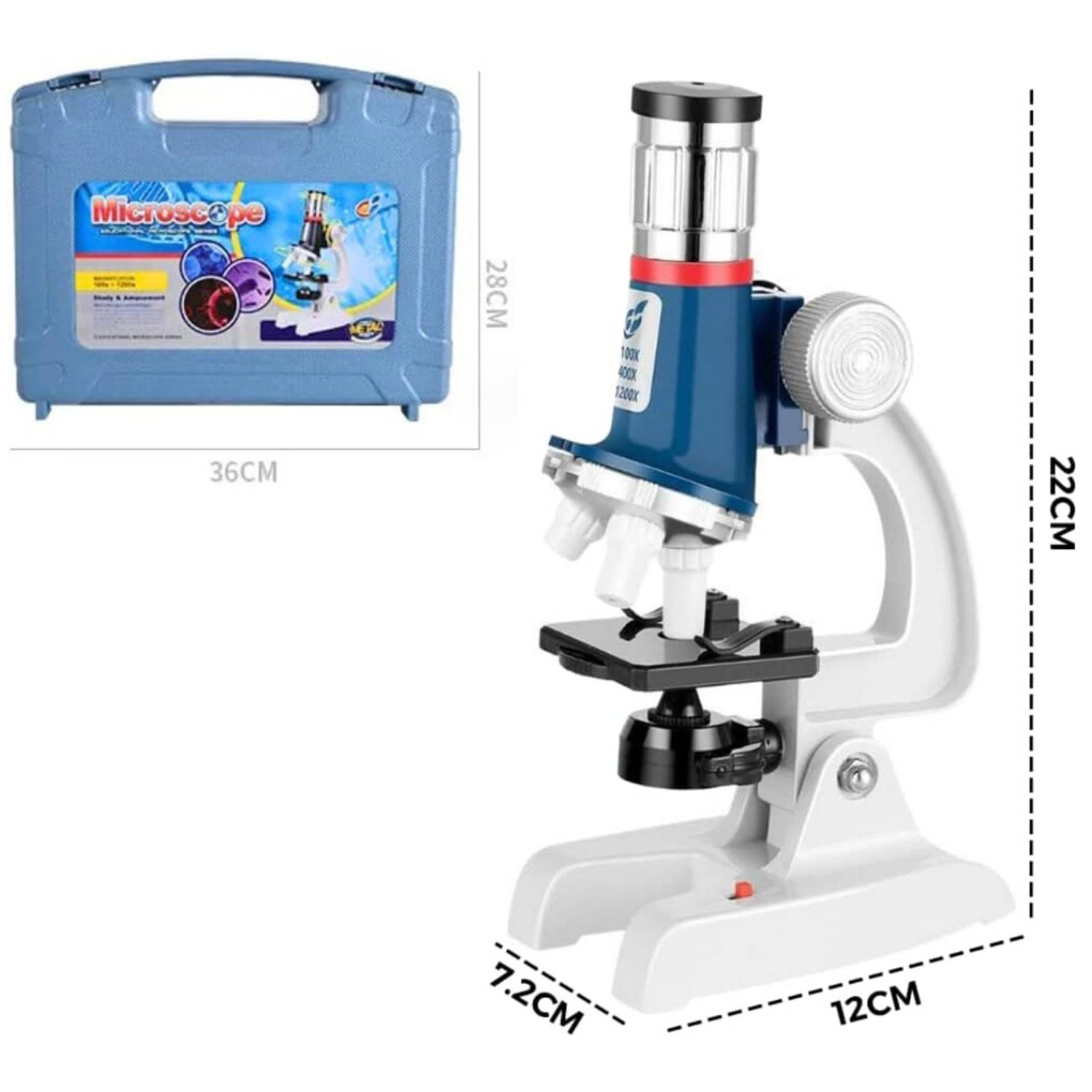
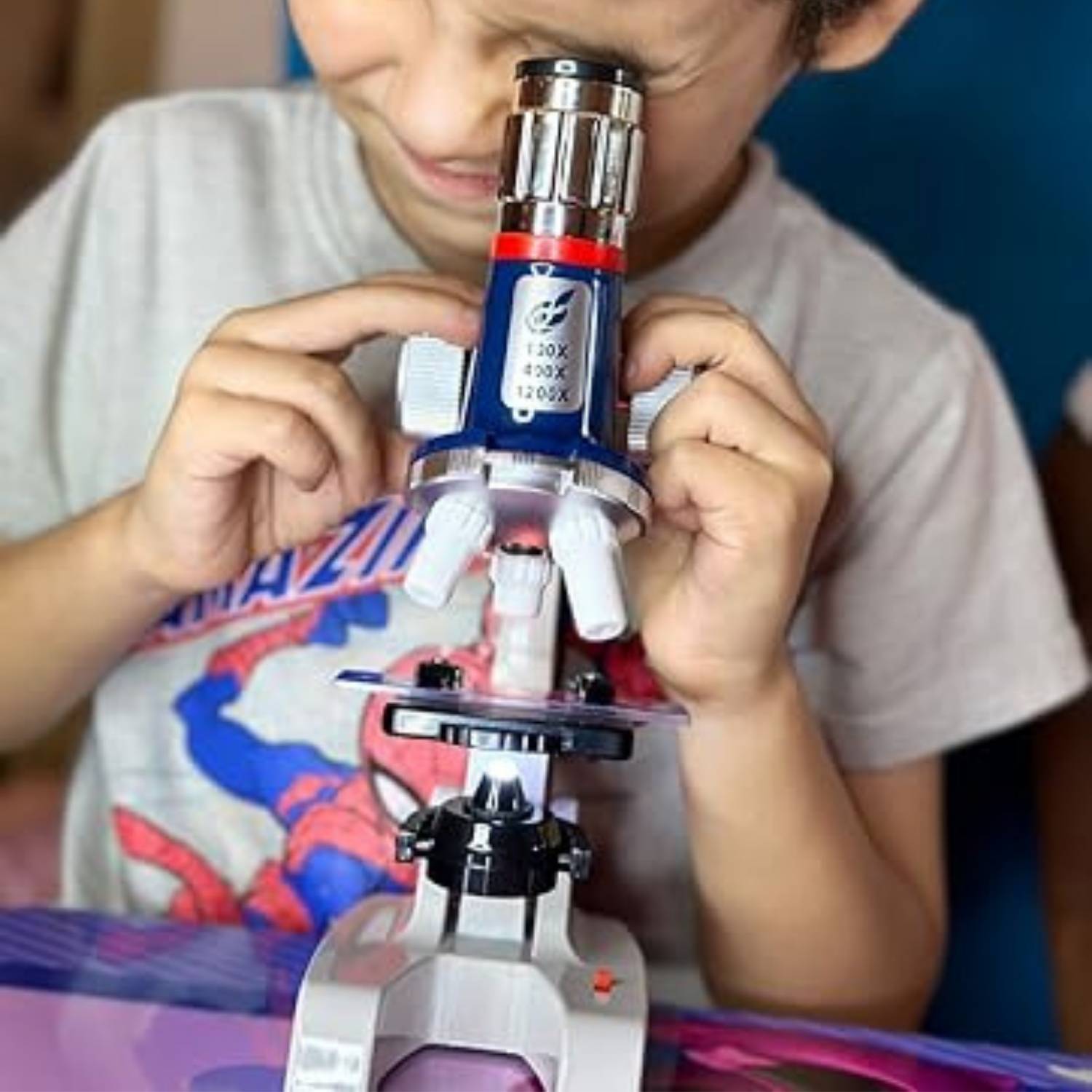
A metal-bodied microscope with a 45 degree head, so a child can look through it without stooping. Magnification to 1200x, with slides, tweezers and a specimen collection set included.
It is delivered right across Singapore. Delivery is free on orders over $100 and otherwise $25.
Still deciding?
Not sure yet? That is fine.
Change-of-mind returns within 15 days of purchase require original packaging and proof of purchase. A $39 deduction applies per order; original delivery charges are excluded and return postage is paid by the buyer. Eligible cancellations carry a 12.5% processing fee. This does not limit rights that cannot be excluded under applicable law.
For faulty, damaged or misdescribed goods, contact us about your rights under the applicable consumer protection law. The available remedy depends on the problem. Read the returns policy.
Got questions?
Frequently Asked Questions
What magnifications does it give?
Three levels: 100x, 400x and 1200x.
What can we actually see at each level?
100x is the one you will use most: hair, fabric, sand, insect wings, leaf edges. 400x reaches plant cells and the larger things moving in pond water. 1200x is the top of the range and needs a well-prepared, very thin slide to give you anything worth looking at.
Is 1200x the setting we should use?
Usually not. Start at 100x every time, find the thing you want, then step up. Going straight to the highest power is the most common reason a first session ends in a blank white circle.
Why is the eyepiece at an angle?
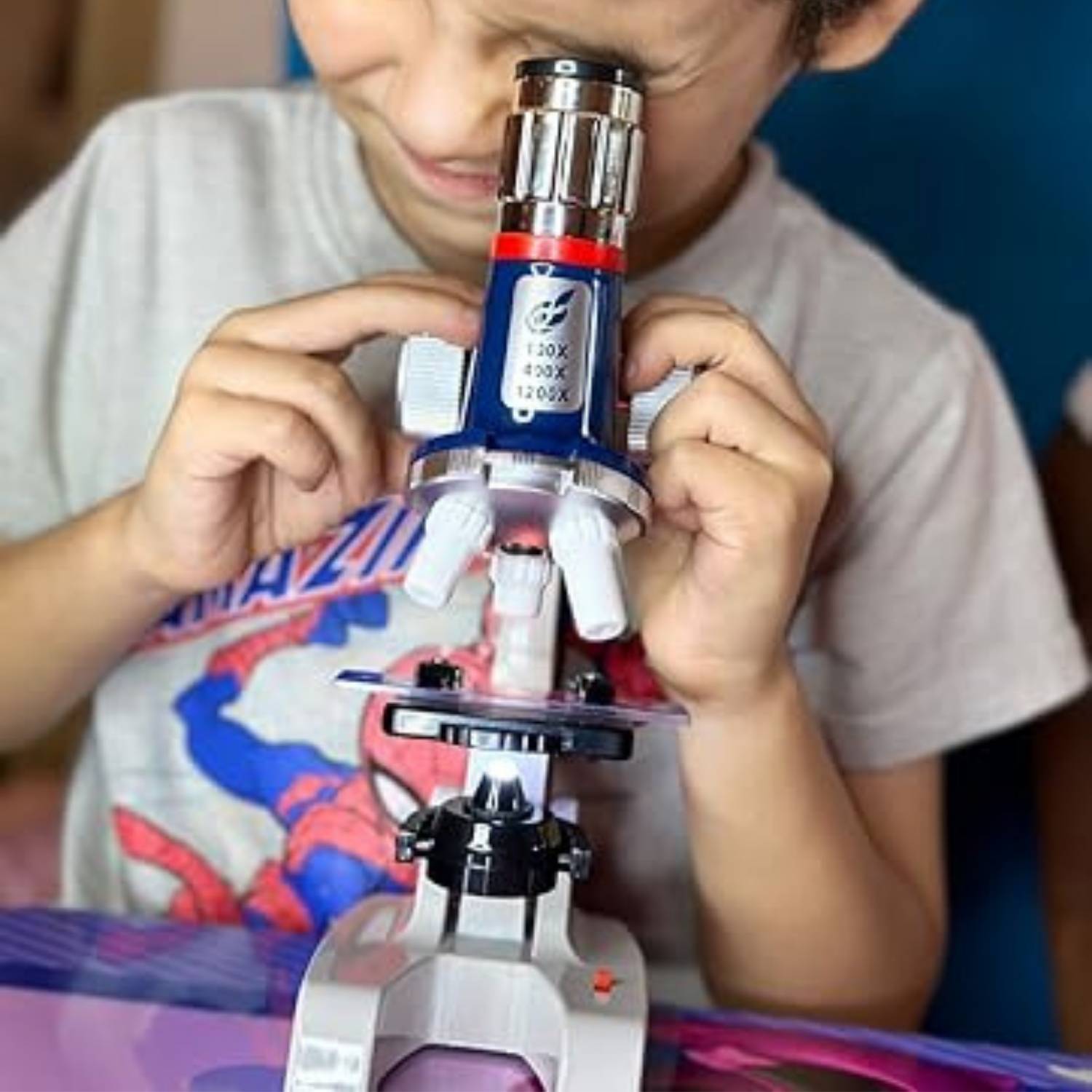
The head is set at 45 degrees so a child can look into it while sitting at a table, instead of bending over the top of it. It is the difference between five minutes and half an hour of interest.
What is it made of?
Metal, which is what lets it survive being carried around and set down heavily.
What comes in the kit?
The microscope plus slides, tweezers, collection vials and a phone holder.
What is the phone holder for?
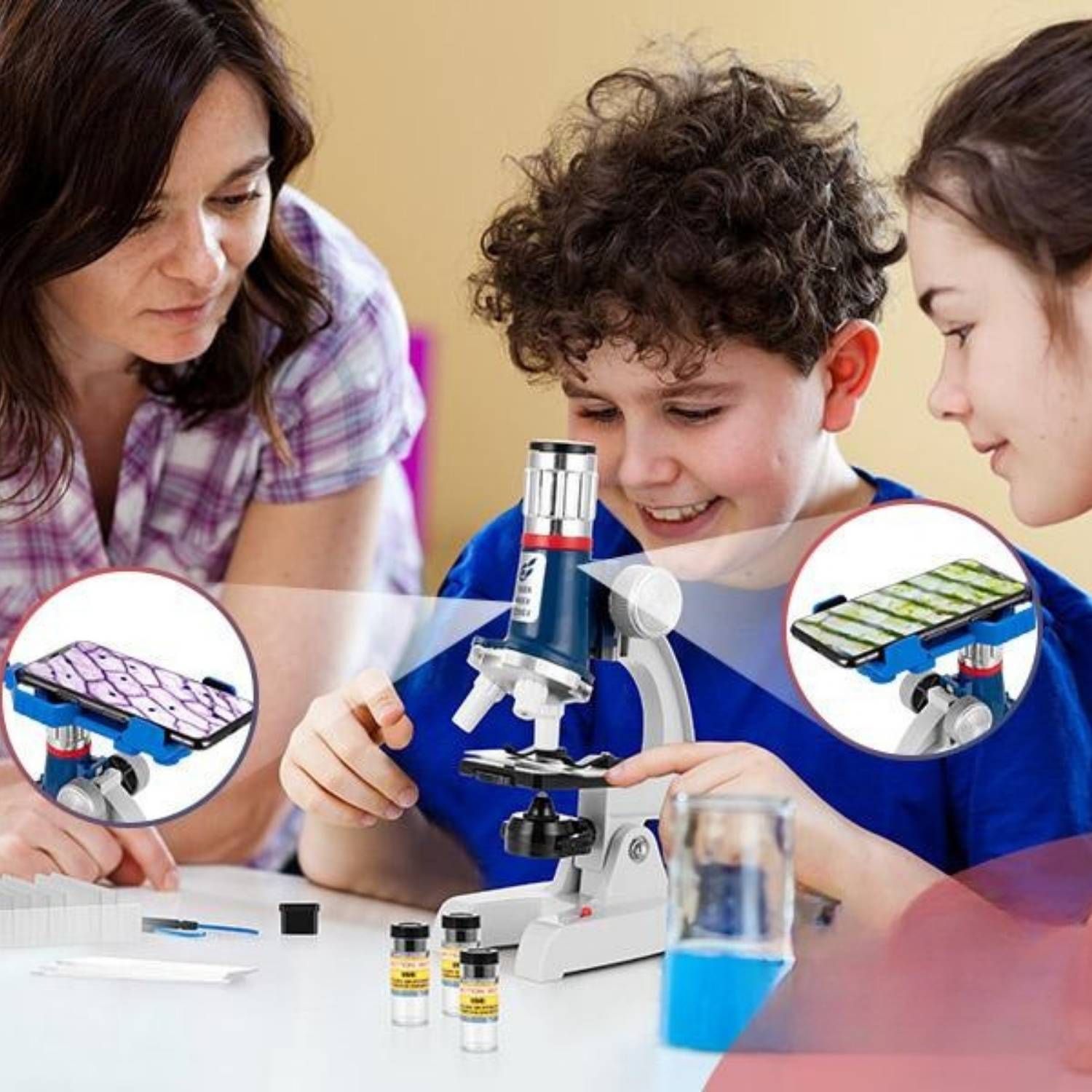
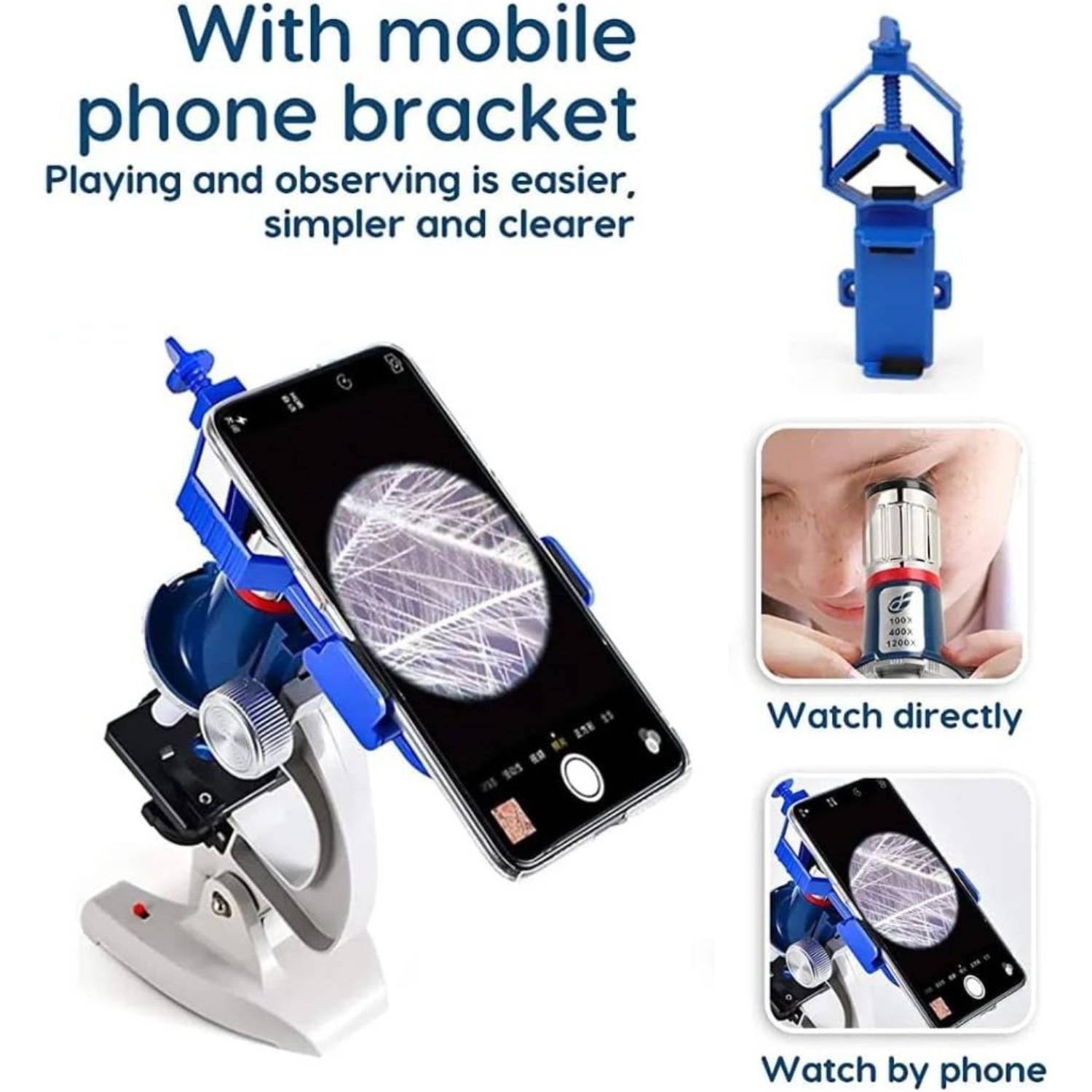
It clamps a phone over the eyepiece so you can photograph what is on the slide. It is also the easiest way for two people to look at the same thing at once.
Can we photograph what we see?
Yes, with the included phone holder. Line the camera up with the eyepiece, then adjust the focus on the microscope rather than on the phone.
How is it lit?
By LED. The listing's reason is worth knowing: an LED runs cool, so it will not cook a living specimen the way a hot bulb does, and it holds a steady colour so what you see is the real colour of the thing.
Does it need batteries or a plug?
The illumination is LED and the listing describes it as low power for long battery life. Check the box for what it takes before your first session.
What are prepared slides?
Slides with a specimen already mounted and sealed under a cover slip. They are the right place to start, because they are guaranteed to show something and they teach focusing before you attempt your own.
What are the blank slides for?
Your own specimens. That is where the interest usually is: pond water, a petal, an onion skin, a thread from a jumper.
How do we make our own slide?
Put the specimen on the glass, add a drop of water, lower a cover slip onto it from one edge so the water spreads without trapping air. Thin and flat is the whole trick.
Why is my slide full of black circles?
Air bubbles under the cover slip. Lower it from one edge rather than dropping it flat, and use a little less water.
Why can I not get anything in focus?
Nearly always because the specimen is too thick. Light has to pass through it. If it is not translucent, no amount of focusing will help.
Why is the image so dark at high magnification?
Higher magnification spreads the same light over a bigger picture. Turn the illumination up, use a thinner specimen, and check nothing is blocking the light path under the stage.
What are the collection vials for?
Carrying specimens home. Pond water, soil, a scraping of moss. They are what turns a walk into a session at the microscope.
What is good to look at first?
Pond water, onion skin, a hair, salt, sugar, a scrap of newspaper and the edge of a leaf. Every one of them looks like something else entirely at 100x.
What age is it for?
It is sold as a beginner's kit for children rather than against a specific age. A child who can be careful with a glass slide can use it, and younger ones will want an adult alongside.
Does an adult need to help?
For preparing slides at first, and for anything involving the cover slips, because they are thin glass. The focusing itself children pick up quickly.
Is it safe?
The microscope itself is. The slides and cover slips are glass and can break and cut, so those are the parts to supervise, and the LED avoids the burn risk a hot lamp would bring.
Is this a toy?
No. It is a working optical instrument with a metal body, and it will show you real cells. It is a beginner instrument rather than a laboratory one.
Can we take it on holiday?
Yes. The listing describes it as travel-ready, and it is the sort of thing that earns its place near a rock pool or a creek.
How do we clean it?
Wipe the body. For the lenses, blow the dust off first and then use lens tissue only. Household cleaners and paper towel damage coated optics.
How do we clean the slides?
Rinse and dry the blank ones and they are reusable. Prepared slides are sealed and should just be wiped and put back in their case.
How should we store it?
Covered, indoors, away from damp. Dust on the optics is the thing that quietly degrades it.
What if a part is missing from the box?
Tell us and we will send it. Do not go looking for a replacement before talking to us.
How much does delivery cost?
Delivery is free across Singapore on orders over $100. Below that it is a flat $25.
How long will it take to arrive?
Five to seven days, delivered anywhere in Singapore.
What currency are the prices in?
US dollars. The price you see is the price you pay, and delivery is added at checkout unless your order qualifies for free delivery.
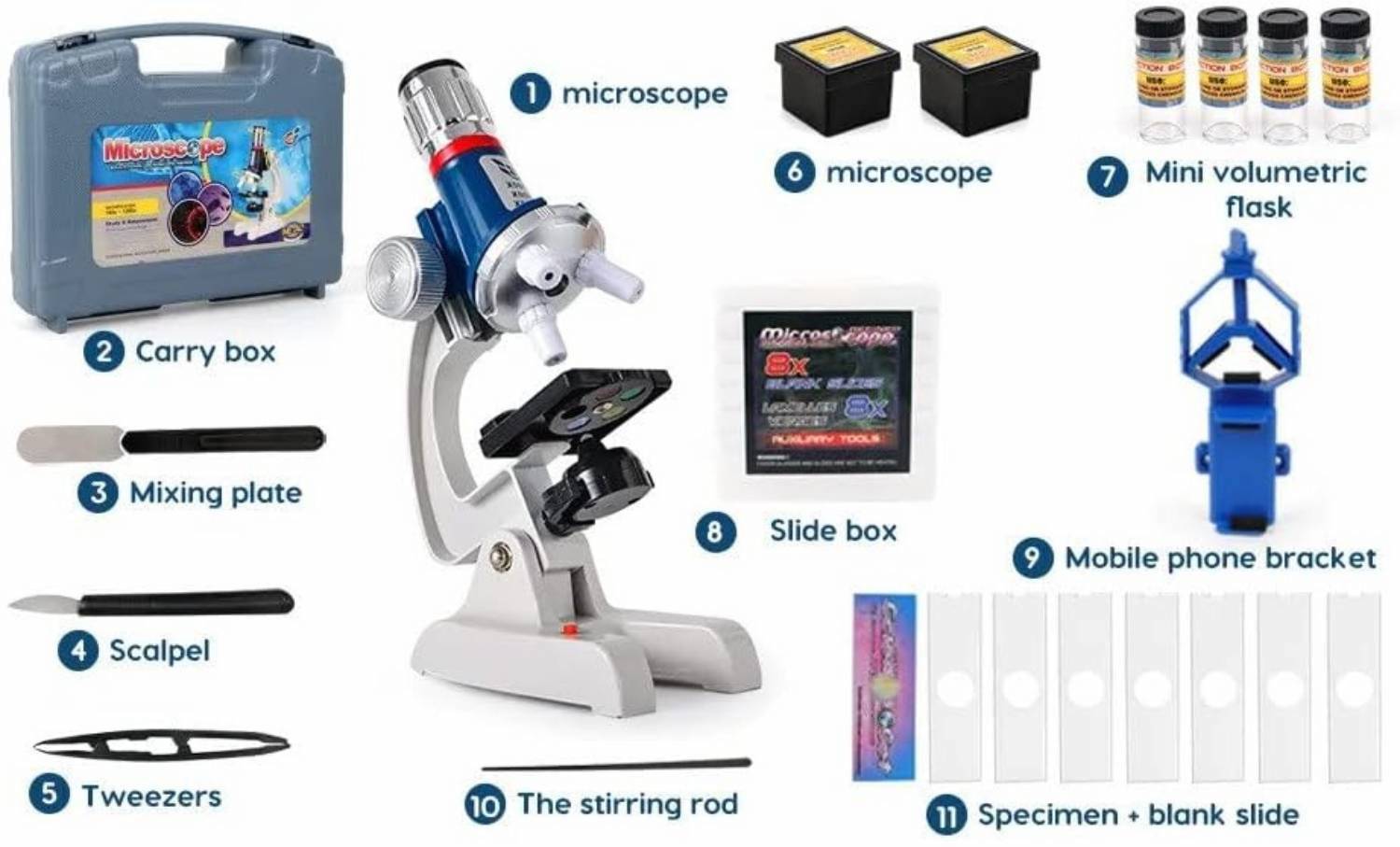
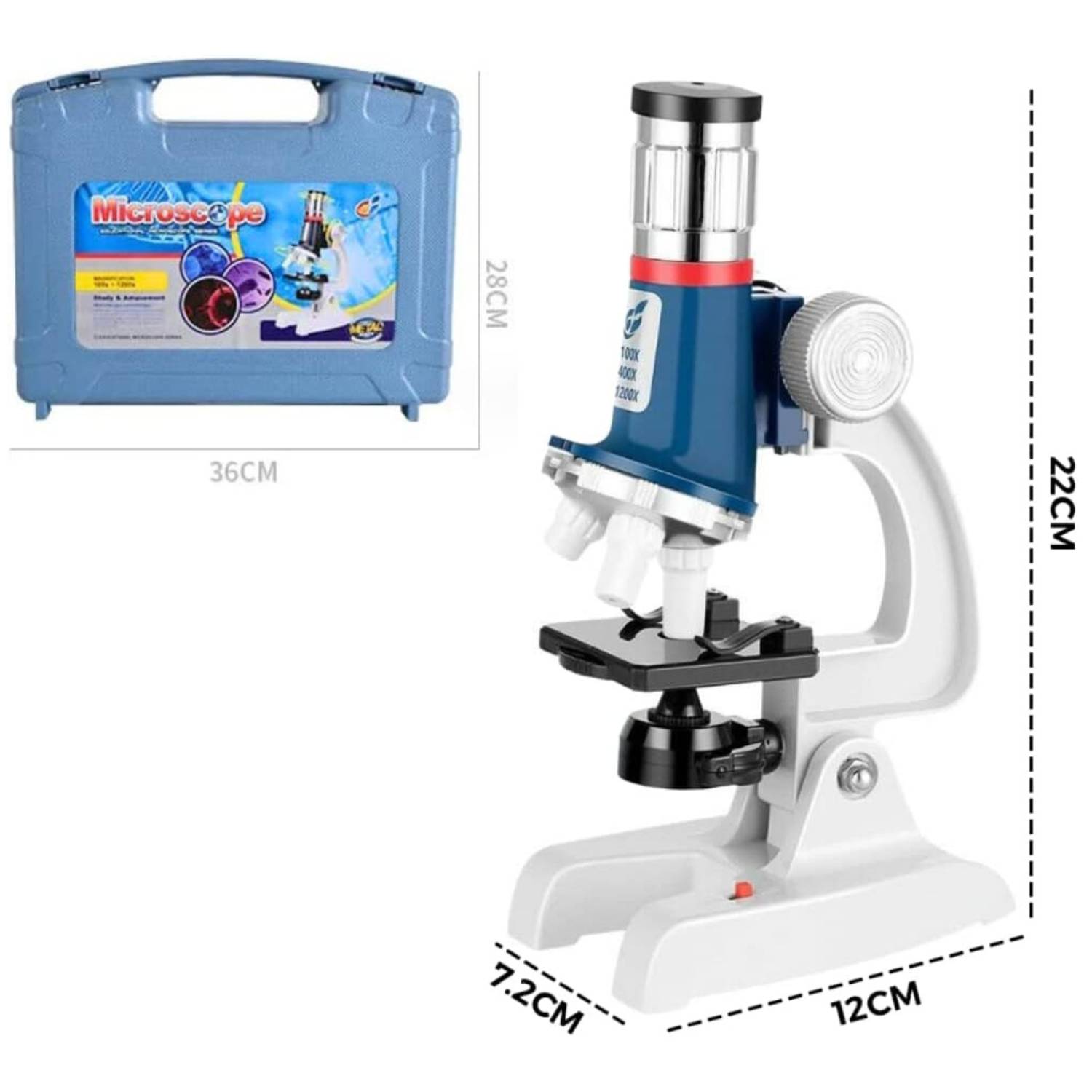
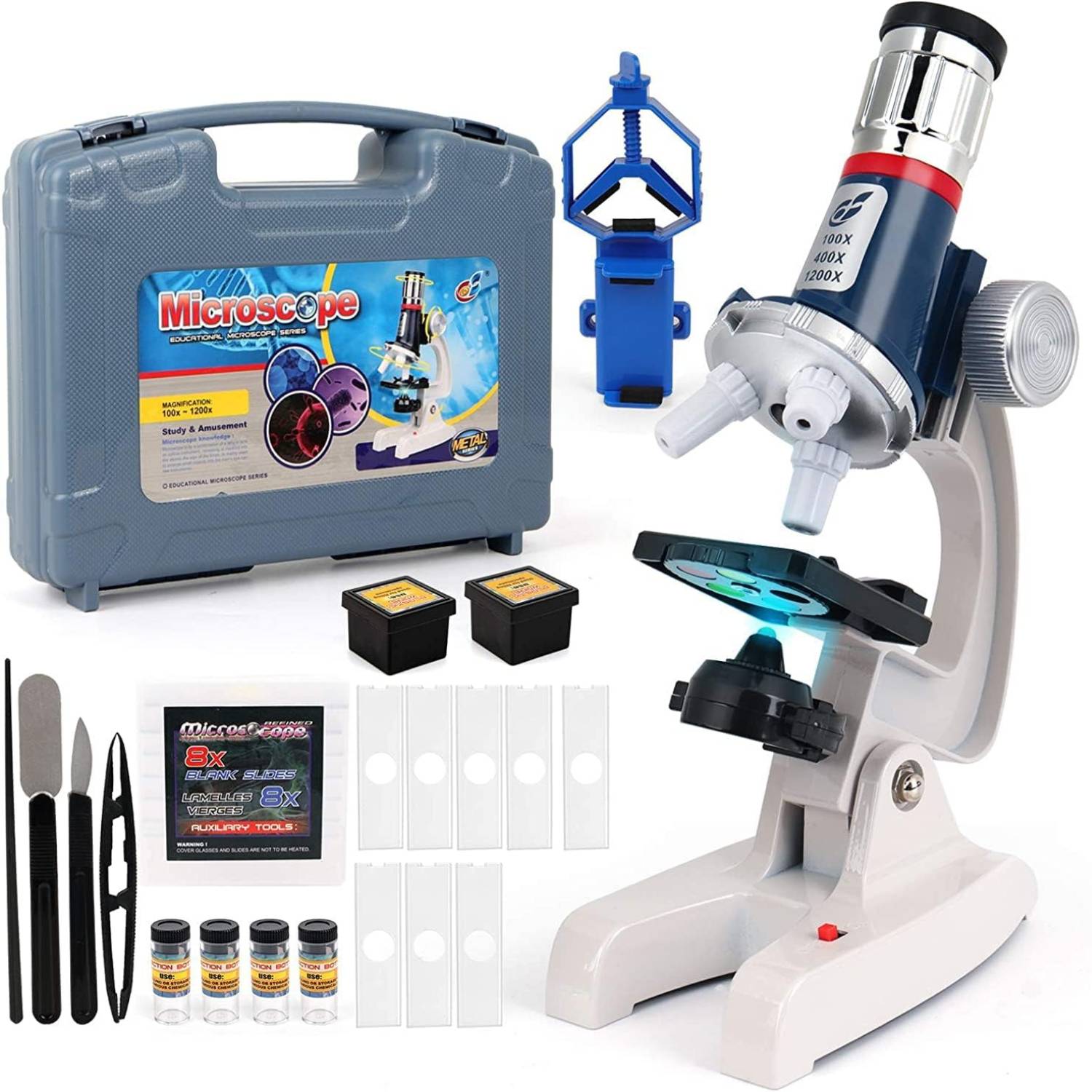
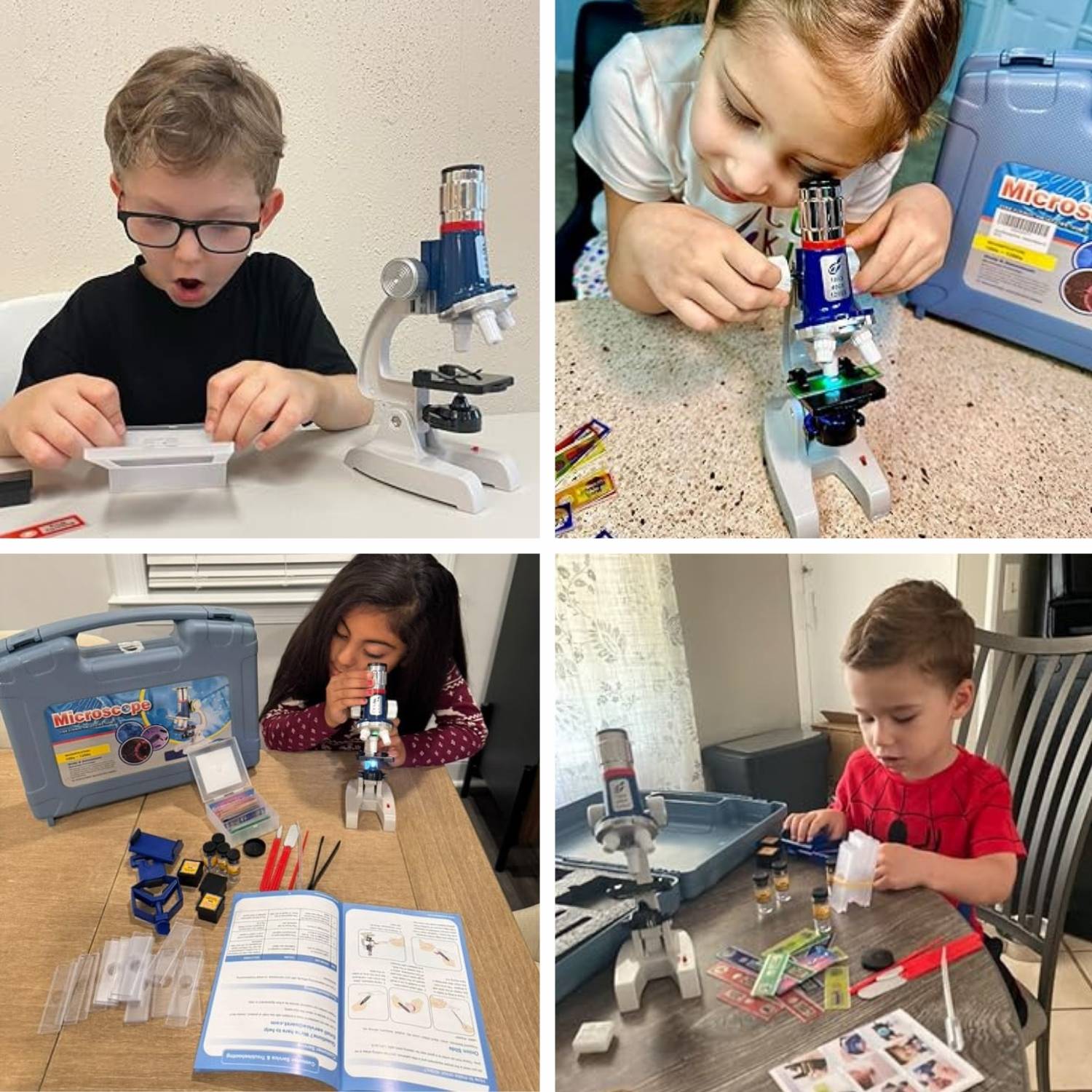
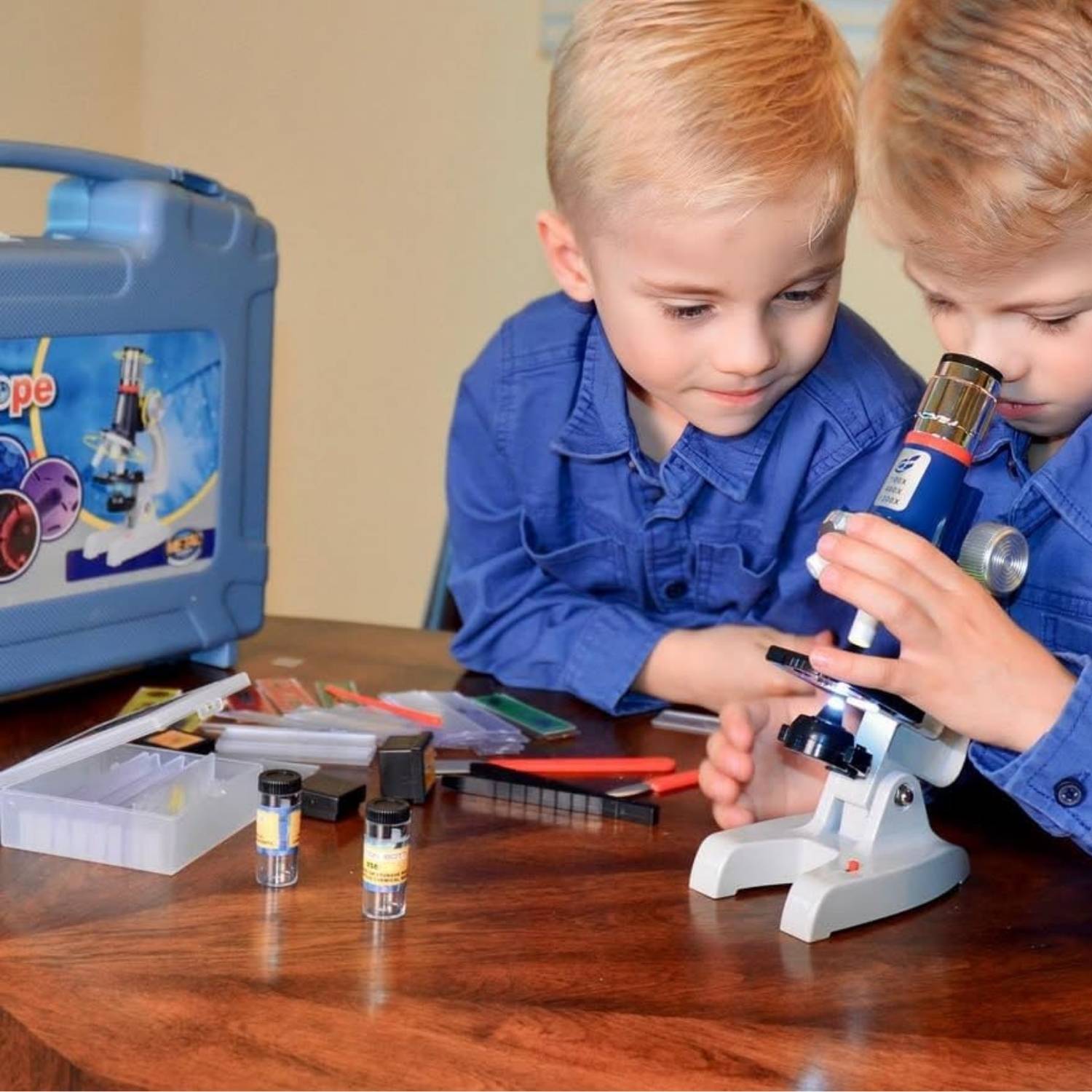
Our kids' beginner microscope kit comes with everything your child needs, including a microscope, plastic slides with case, label trays, spatula, stirring rod, tweezers, and collecting vials.
Plus, a mobile phone holder allows for high-definition imaging and reduces eye fatigue.
EACH KIT INCLUDES
SPECIFICATIONS
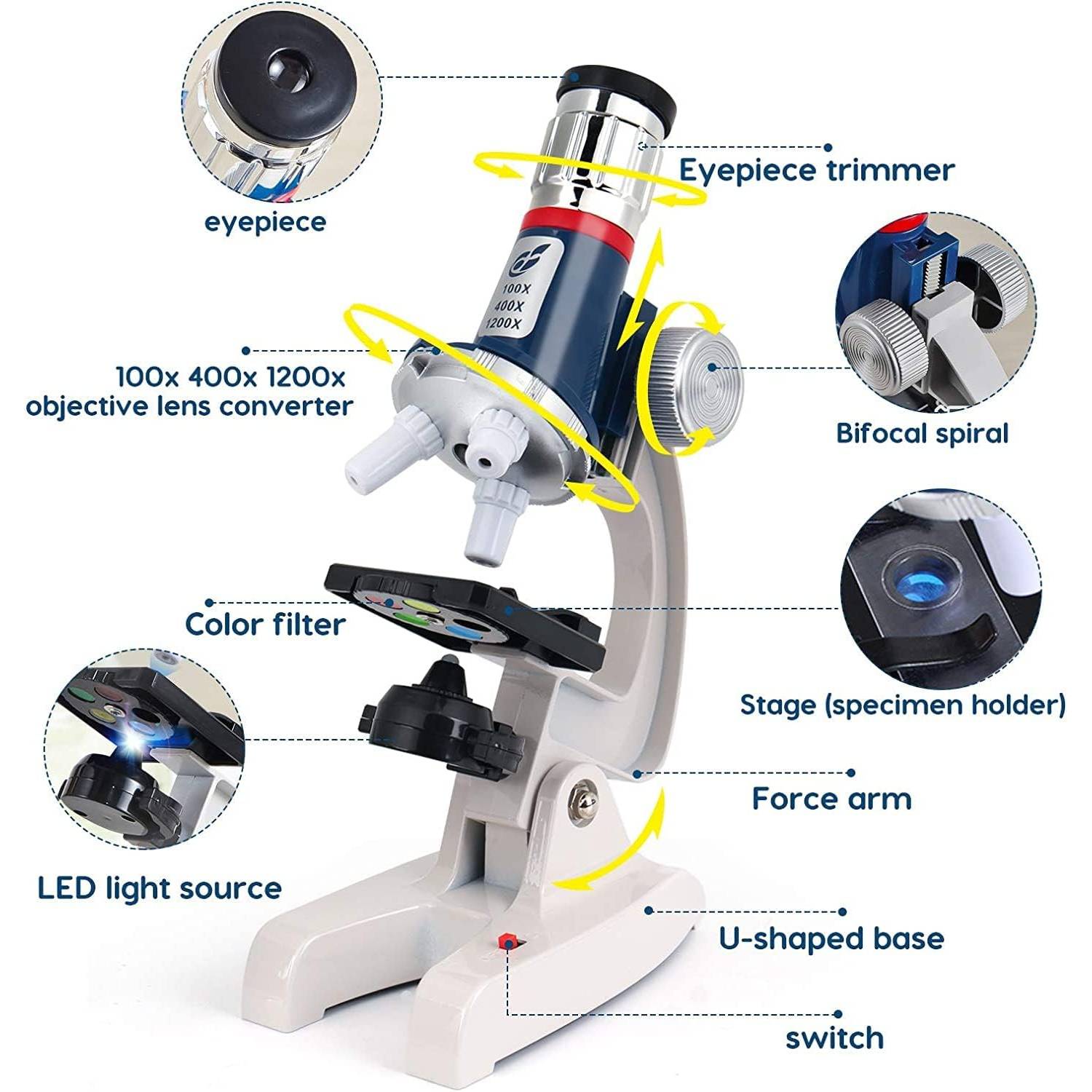
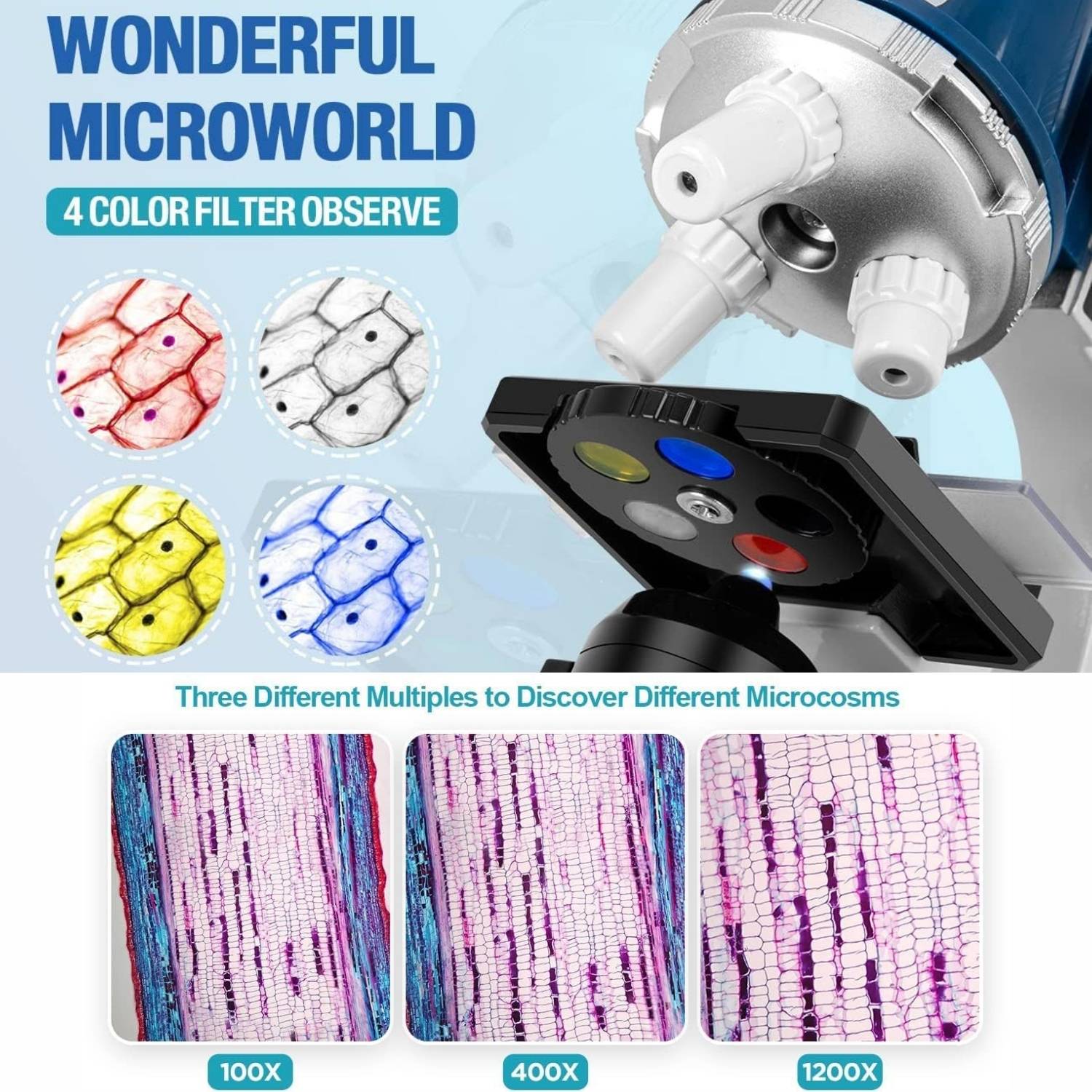
- 3 adjustable magnifications: 100x, 400x, and 1200x
- Rotating color filter wheel (4 colors) and built-in LED illumination for enhanced image quality
- LED lighting system with independent switch for easy viewing of slides
- Valuable complete accessories include plastic slides with case, label tray, plastic spatula, stirring rod, plastic tweezers, and collection vials
- Mobile phone holder included for viewing high-definition images on a phone to reduce eye strain

PLEASE ALLOW 5-7 DAYS SHIPPING
Direct To Your Door - All Across The USA

Unlimited Scientific Discovery
This comprehensive kit gives young scientists everything they need to investigate biology and histology through hands-on experimentation and observation.Quality Family Bonding Time
Transform everyday moments into memorable learning experiences. This science microscope creates engaging activities that bring families together, bridging age gaps with discoveries that fascinate children and adults equally.Three Professional Magnification Levels
Zoom from 100x to 400x and all the way to 1200x magnification to reveal hidden worlds invisible to the naked eye. Each power level unveils new details that captivate curious minds and inspire deeper investigation.STEM Learning Made Tangible
Perfect for homeschool curricula, classroom environments, or as a thoughtful gift for birthdays and holidays. This hands-on learning tool transforms abstract scientific concepts into concrete discoveries that build genuine understanding and enthusiasm for the natural sciences.Travel-Ready Design
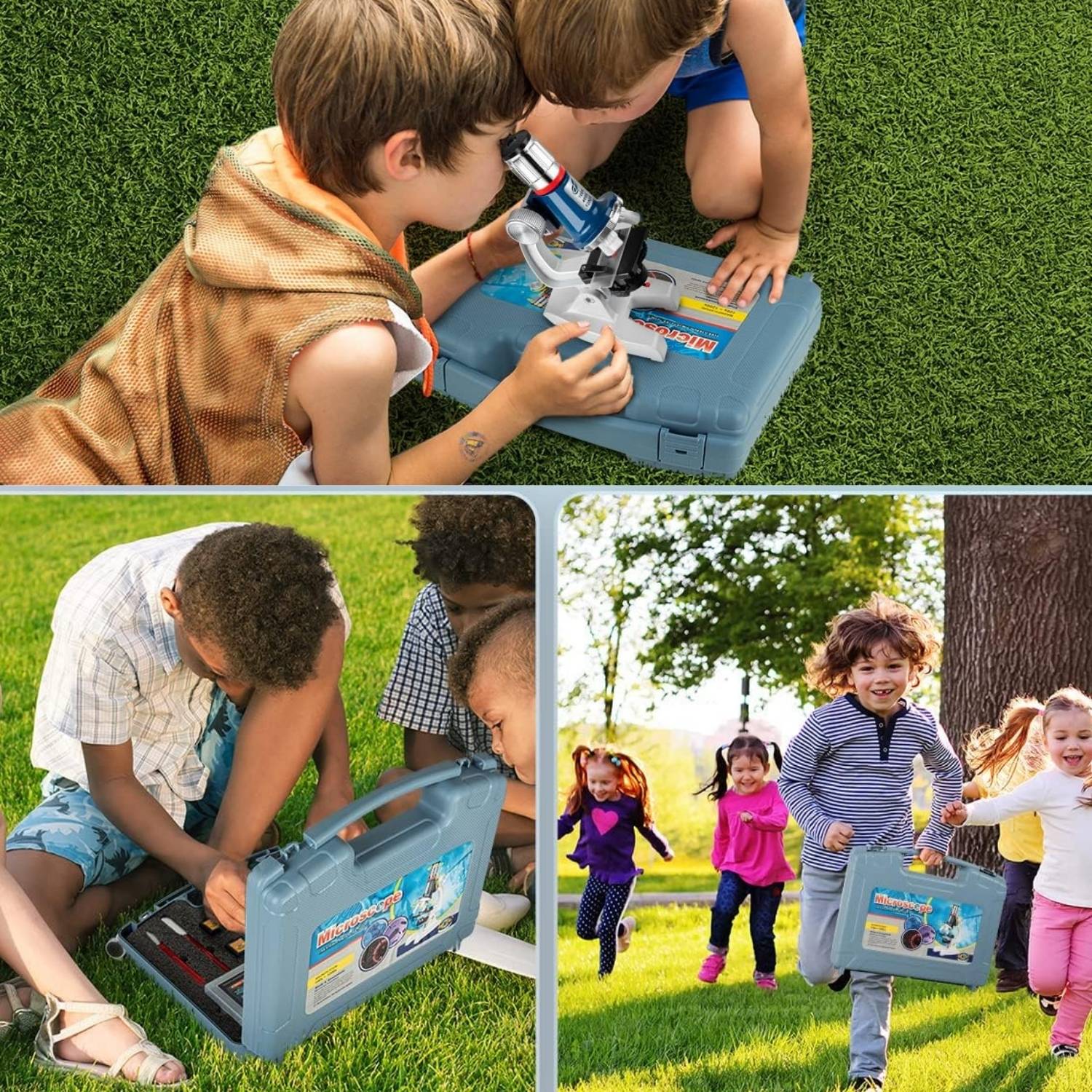
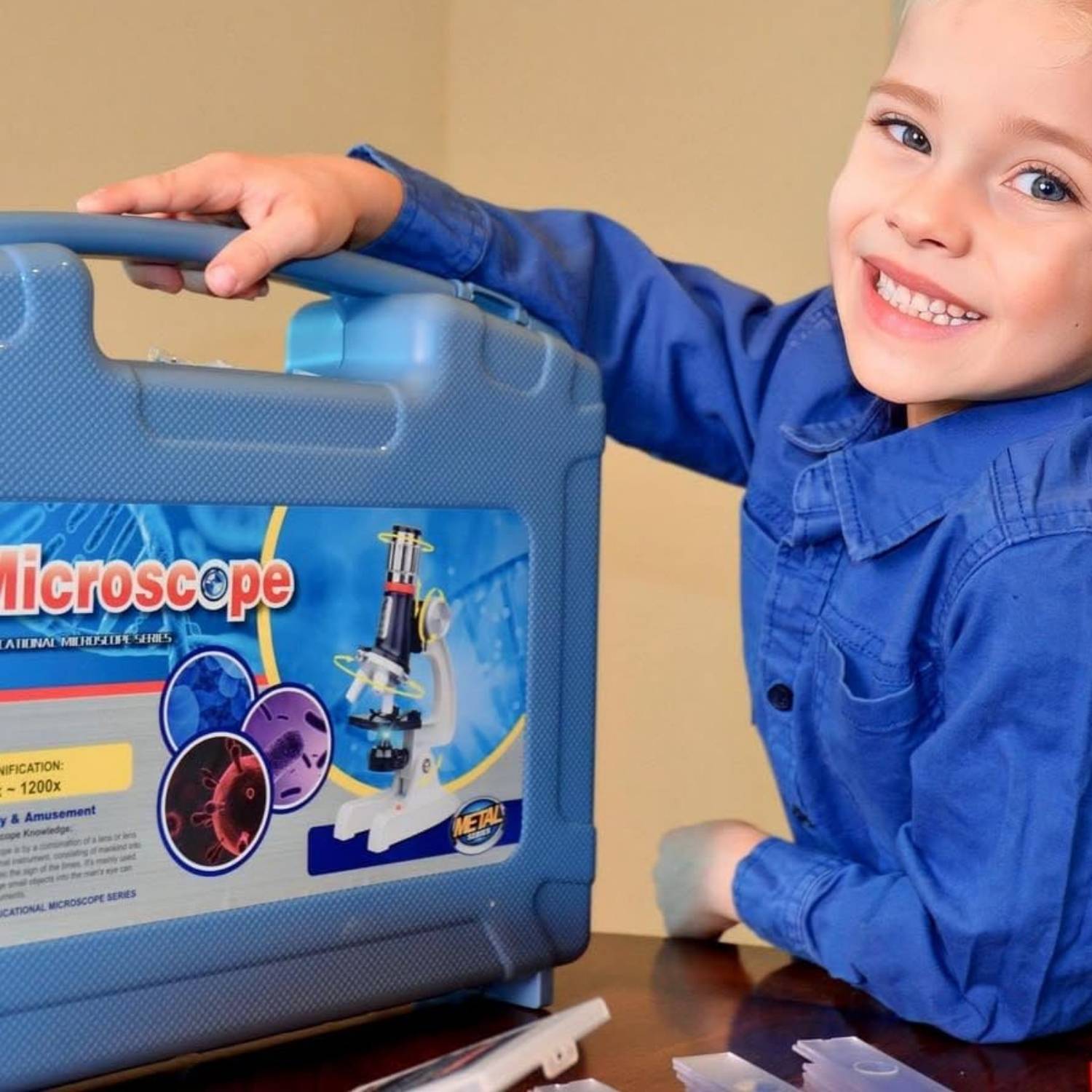
Housed in a durable ABS carrying case, this metal-bodied microscope travels safely wherever learning happens. Move seamlessly from home to classroom to outdoor fieldwork without worry about damage or lost components.Complete Exploration System
Your kit arrives with essential tools including precision tweezers, mixing plates, droppers, scalpels, and more. Everything needed for serious scientific investigation in one organized package.Nurturing Future Scientists
This authentic scientific instrument makes complex concepts accessible and enjoyable. By introducing children to biology and botany through direct observation, we cultivate natural curiosity and develop genuine passion for scientific exploration and discovery.
 Frequently Asked Questions

Kids Microscope Kit: The Ultimate Guide to Inspiring Young Scientists and Explorers
Have you noticed your child's endless fascination with tiny bugs, leaves, or mysterious specks they find around the house? That natural curiosity about the miniature world represents one of childhood's most valuable traits, yet most parents struggle to channel it into meaningful learning experiences. A quality kids microscope kit transforms fleeting interest into sustained scientific exploration, converting those "what is this?" questions into hands-on discoveries that build genuine understanding and lifelong passion for science.The challenge facing most parents isn't whether their children would enjoy microscopy. It's finding equipment that actually delivers clear images without requiring a biology degree to operate. Too many science microscopes marketed for children produce nothing but frustration with blurry views, impossible focus mechanisms, and construction so flimsy the microscope becomes unusable after minimal use. These disappointments don't just waste money. They extinguish the spark of scientific curiosity that drew your child to exploration in the first place.
Throughout this comprehensive guide, we're examining everything you need to understand about selecting and using a beginner microscope kit. From deciphering which specifications genuinely matter to mastering techniques that deliver successful viewing sessions, you'll discover how to transform your kitchen table into a scientific laboratory. Whether your child dreams of becoming a biologist, simply loves discovering hidden details, or needs engaging alternatives to screen time, the right kids microscope kit opens entirely new dimensions of wonder. Let's explore what separates inspiring experiences from expensive disappointments.
Understanding Kids Microscope Kits: Real Science Tools, Not Toys
Before exploring specific features and capabilities, let's establish what distinguishes an authentic kids microscope kit from toy versions and professional laboratory equipment.What Defines a Quality Science Microscope for Children
A genuine beginner microscope kit isn't a plastic toy with magnifying lenses that show nothing clearly. Neither is it professional laboratory equipment requiring extensive training to operate effectively. Quality kids microscope kits occupy the essential middle ground where real optical performance meets age-appropriate usability.These microscopes incorporate actual glass optics capable of revealing authentic microscopic detail. You'll observe individual cells in onion skin, see the compound eyes of insects magnified hundreds of times, identify bacteria in pond water, and resolve structures completely invisible to naked eyes. The images might not match what research microscopes produce, but they're genuine views of actual microscopic structures rather than disappointing blurs.
Equally important, these microscopes acknowledge their users' experience level. Focus mechanisms operate smoothly without requiring excessive force or developing hand strength. Specimen preparation stays simple rather than demanding complex staining procedures. The construction balances durability with practical size, recognizing these microscopes will be handled by enthusiastic young scientists learning proper techniques.
The Science Behind Seeing Small
Understanding basic microscope operation helps you appreciate what your kids microscope kit can and cannot reveal. Microscopes accomplish magnification through multiple lens systems working together to enlarge images far beyond what single magnifying glasses achieve.The objective lens, positioned near the specimen, creates an initial magnified image. The eyepiece lens then magnifies this image further, producing the final view you observe. Total magnification equals objective magnification multiplied by eyepiece magnification. A 10x eyepiece combined with a 40x objective delivers 400x total magnification (10 × 40 = 400).
Resolution, the ability to distinguish between two nearby points as separate rather than blurred together, matters as much as magnification. Empty magnification, making images larger without improving resolution, produces bigger but fuzzier views. Quality science microscopes for children balance magnification with resolution to deliver clear, detailed images rather than impressively high but useless magnification numbers.
Illumination proves critical for microscopy because specimens appear dark without adequate lighting. Built-in LED illumination provides consistent, adjustable brightness that makes viewing comfortable and reveals details that dim lighting obscures. Quality kids microscope kits include dedicated lighting systems rather than relying on ambient room light.
Essential Specifications That Actually Matter
Microscope specifications can overwhelm parents unfamiliar with scientific equipment. Let's translate technical numbers into practical capabilities you can understand.Magnification Ranges: Understanding the Numbers
Beginner microscope kits typically offer magnification ranges from 40x to 1200x across multiple objective lenses. These numbers indicate how many times larger objects appear compared to viewing with naked eyes. A hair strand magnified 100x appears one hundred times wider than normal.Lower magnifications around 40x to 100x provide excellent views of larger specimens like insect parts, plant structures, and fabric fibers. These powers deliver wide fields of view making specimens easy to locate and observe in context. They're perfect for initial exploration and general observation.
Medium magnifications around 200x to 400x reveal finer details like individual plant cells, small organisms in pond water, and crystal structures. These magnifications represent the sweet spot for most kids microscope kit applications, providing substantial detail while remaining relatively easy to use.
High magnifications around 600x to 1200x show the tiniest structures like bacteria, cell nuclei, and subcellular details. These extreme powers require excellent technique, proper illumination, and well-prepared specimens. They represent advanced capabilities your child can grow into as skills develop.
Optical Quality and Construction
The quality of glass used in lenses profoundly affects image clarity even when magnification specifications match between microscopes. Quality science microscopes for children use precision-ground glass optics with anti-reflection coatings that maximize light transmission and minimize internal reflections degrading image quality.Metal construction rather than plastic provides stability essential for high-magnification viewing where tiny vibrations become magnified movements disrupting observation. A solid metal frame and base prevent wobbling that makes focusing impossible and specimens difficult to keep centered.
The focusing mechanism should operate smoothly with fine adjustment capability allowing precise focus control. Coarse focus moves the stage or objective rapidly for initial positioning, while fine focus provides minute adjustments achieving perfect sharpness. Both mechanisms working together deliver the control necessary for successful observation.
Illumination Systems
Built-in LED illumination represents one of the most important features separating quality kids microscope kits from inadequate alternatives. LEDs provide bright, cool light that won't heat specimens, consume minimal power for long battery life, and deliver consistent color temperature for accurate observation.Adjustable brightness lets you optimize illumination for different specimens and magnifications. Transparent specimens like plant cells require less light than opaque specimens like insects. Higher magnifications need brighter illumination because light spreads over larger apparent areas.
Some beginner microscope kits include rotating color filter wheels that modify illumination color. Different colored lights reveal different specimen details, adding another dimension to observation capabilities. Blue light enhances contrast in many biological specimens, while green light can reveal details that white light obscures.
Complete Kit Components That Enhance Learning
A comprehensive kids microscope kit includes more than just the microscope itself. These accessories transform the microscope from a viewing instrument into a complete scientific exploration system.Prepared Specimen Slides
Quality beginner microscope kits include sets of prepared slides featuring professionally mounted specimens. These slides let children immediately begin observing without mastering specimen preparation techniques. Typical sets include plant sections, insect parts, textile fibers, and other interesting specimens.Prepared slides demonstrate what properly mounted specimens should look like, providing standards for comparison when children create their own slides. They also ensure successful first observations that build confidence and enthusiasm before attempting more challenging specimen preparation.
The variety of included specimens exposes children to diverse subjects spanning biology, materials science, and natural history. This breadth prevents boredom while demonstrating microscopy's wide-ranging applications across scientific disciplines.
Blank Slides and Cover Slips
Blank slides and cover slips enable children to prepare their own specimens, transforming passive observation into active scientific investigation. Creating slides teaches important skills including careful specimen handling, proper mounting techniques, and systematic preparation procedures.The process of preparing slides for your science microscope for children encourages careful thought about what to examine and how to present it effectively. Children learn that specimen preparation significantly affects observation quality, developing attention to detail and procedural thinking.
Having sufficient blank slides allows extensive experimentation without fear of running out. Children can examine everything from pond water and leaf surfaces to fabric fibers and food particles, building comprehensive understanding through hands-on exploration.
Collection and Preparation Tools
Complete kids microscope kits include essential tools for collecting and preparing specimens. Tweezers allow careful manipulation of tiny objects without damage. Droppers transfer liquids precisely for creating wet mounts. Spatulas and mixing rods help prepare specimens properly.Collection vials let young scientists gather specimens from nature for later examination. Pond water, soil samples, leaf surfaces, and other natural materials become research subjects when proper collection tools make gathering them practical.
These tools aren't just accessories. They teach proper scientific techniques and careful manipulation skills. Learning to handle specimens gently, prepare slides systematically, and organize materials methodically builds habits valuable throughout scientific education.
Smartphone Adapter: Modern Documentation
Many contemporary beginner microscope kits include smartphone adapters that let children photograph what they observe. This capability transforms microscopy from fleeting observation into documented discovery, creating permanent records of explorations.Photography through microscopes requires patience and technique, skills that develop through practice. Successfully capturing clear images of microscopic subjects builds satisfaction while teaching important lessons about lighting, focus, and careful technique.
These images become science project documentation, social media content for sharing discoveries with friends, or simply personal records tracking your child's developing microscopy skills. The ability to save and share observations extends the microscope's educational value far beyond the viewing session itself.
What Children Can Actually Observe
Understanding realistic expectations prevents disappointment while helping you maximize successful observations with your kids microscope kit.Plant Structures and Cells
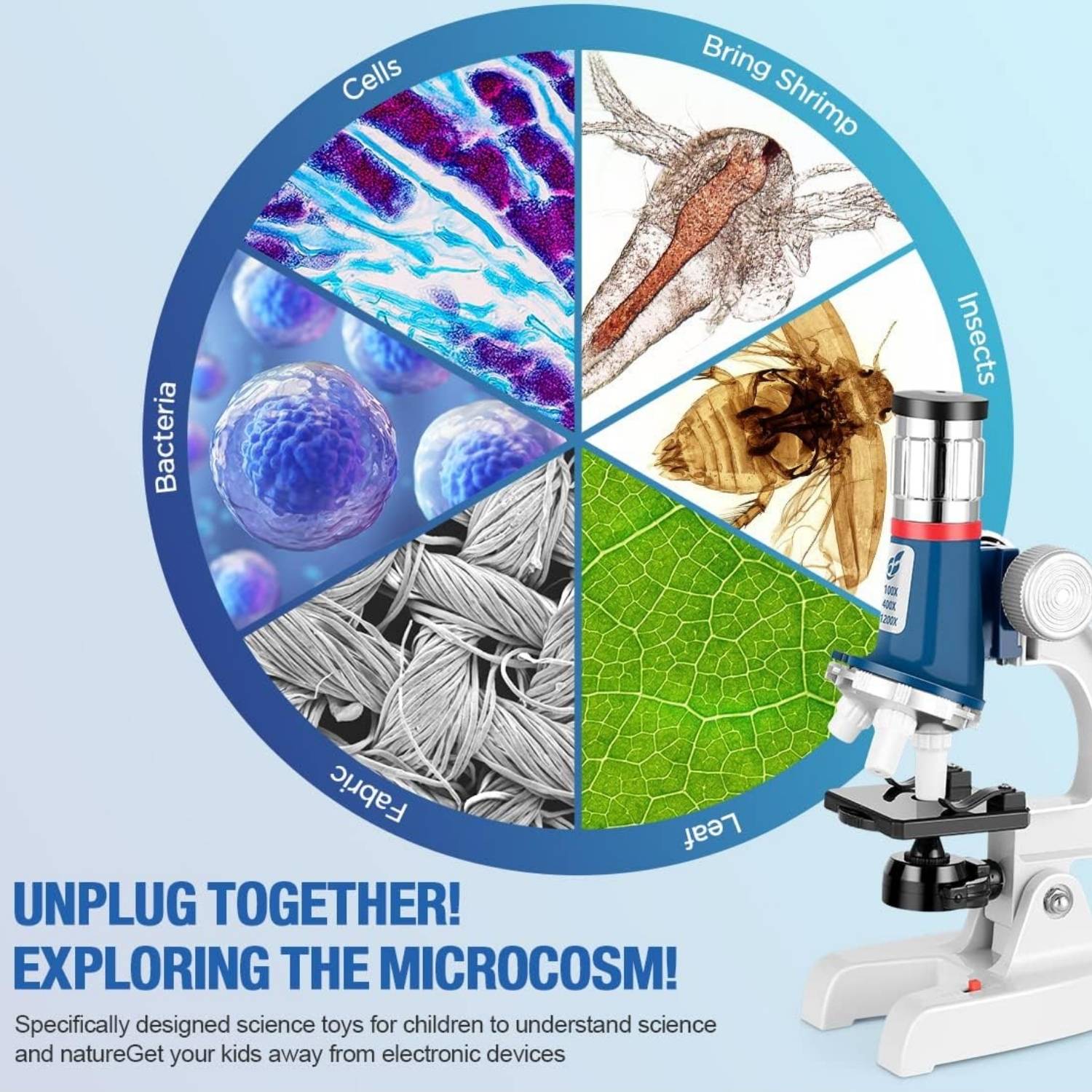
Plant materials provide excellent microscopy subjects combining easy availability with fascinating detail. Thin leaf sections reveal cell walls, chloroplasts, and vascular structures. Onion skin shows individual cells clearly delineated, perfect for understanding cell structure fundamentals.Flower petals display brilliant colors at high magnification while revealing the cellular architecture producing those hues. Pollen grains show intricate surface patterns unique to each plant species. Seeds contain remarkable internal structures visible through careful sectioning.
These observations connect directly to biology education, making textbook concepts tangible and memorable. Seeing actual plant cells through your science microscope for children transforms abstract diagrams into concrete reality that genuine understanding requires.
Insects and Small Organisms
Insects and other small creatures reveal astonishing detail under microscopic observation. Compound eyes show thousands of individual facets. Wing surfaces display scales arranged in precise patterns creating colors and textures. Legs reveal hooks, pads, and joints explaining how insects grip surfaces and move.Pond water teems with microorganisms invisible to naked eyes but clearly visible through beginner microscope kits. Paramecia swim actively across the field of view. Daphnia's transparent bodies reveal internal organs in motion. Algae display diverse forms from simple spheres to complex filaments.
These living specimens demonstrate biology in action, showing life processes rather than static structures. Movement, feeding, and reproduction become observable phenomena rather than abstract concepts, building intuitive understanding of biological principles.
Household and Everyday Materials
Common household items reveal unexpected complexity under microscopic examination. Table salt crystals show perfect cubic geometry. Sugar displays different crystal structures depending on type. Fabrics reveal intricate weaving patterns and individual fiber details.Paper shows wood fibers matted together. Food items display cellular structures, starch grains, and other components. Hair reveals scales covering the shaft surface. Skin cells appear constantly shed from fingertips.
These familiar materials transformed through magnification demonstrate that fascinating science exists everywhere, not just in exotic specimens. This realization encourages continuous exploration and observation, turning the everyday world into an endless source of scientific investigation.
Getting Started: First Steps With Your Beginner Microscope Kit
Successful initial experiences with kids microscope kits build enthusiasm and confidence that sustain long-term interest. Following proven procedures ensures those crucial first observations succeed.Assembly and Setup
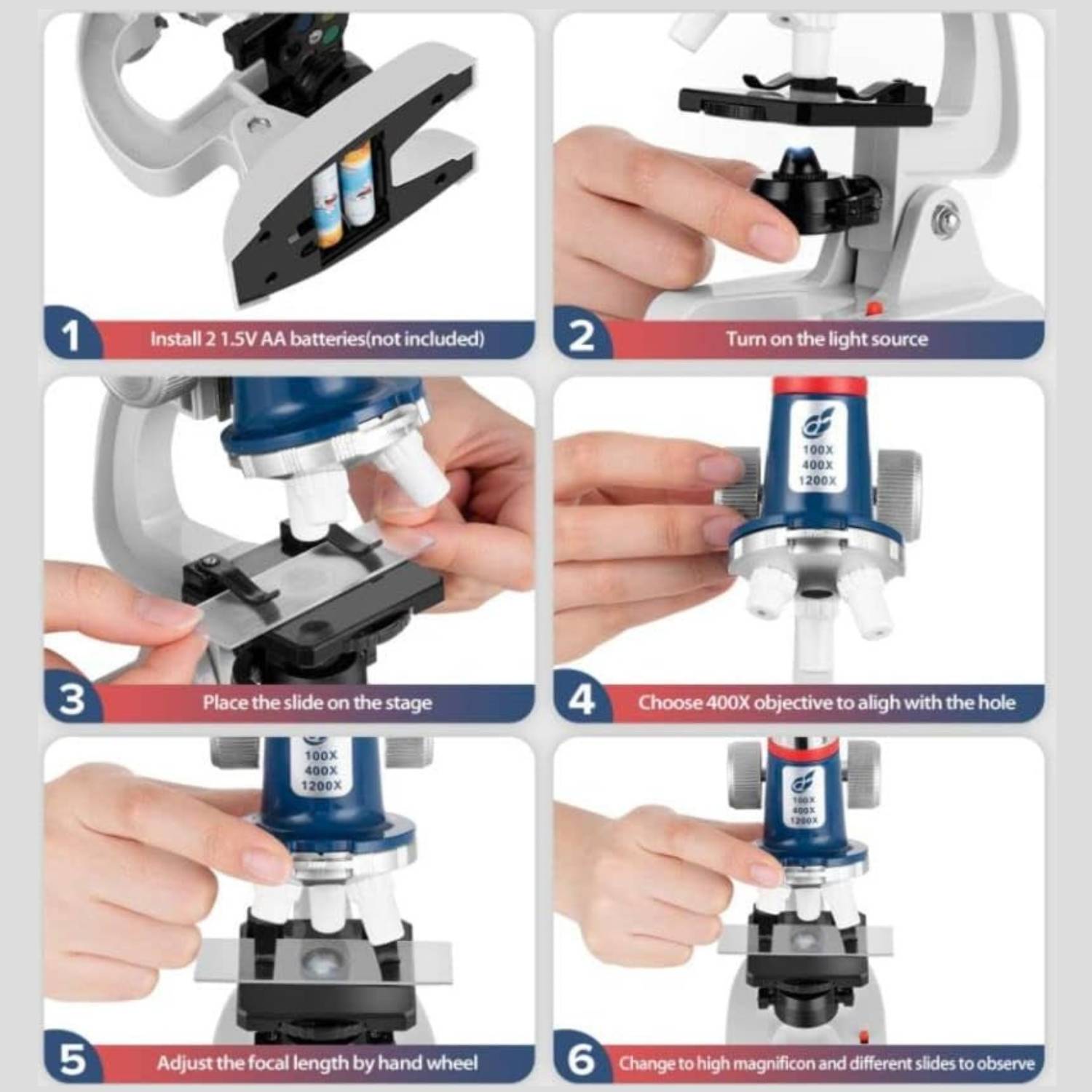
Quality science microscopes for children arrive mostly assembled, requiring minimal setup before first use. Install batteries or connect power for the illumination system. Ensure the stage, the platform holding slides, moves smoothly and locks securely.Verify all objective lenses rotate freely into position with definite click stops. Check that the eyepiece sits firmly in place. Adjust the interpupillary distance if using binocular eyepieces, matching the spacing to your child's eyes for comfortable viewing.
Clean all optical surfaces gently with appropriate lens tissue before first use. Manufacturing and shipping can deposit dust on lenses that degrades initial image quality, creating disappointing first impressions that proper cleaning prevents.
Your First Observation: Using Prepared Slides
Begin with included prepared slides rather than attempting specimen preparation immediately. Start with the lowest magnification objective lens, typically marked 4x or 10x. Place a prepared slide on the stage and secure it with clips.Turn on the illumination and adjust brightness to comfortable levels. Look through the eyepiece while slowly turning the coarse focus knob. The specimen will transition from complete blur to recognizable image as focus approaches. Use fine focus for final sharpness adjustment.
Center interesting features in the field of view by moving the slide position. Higher magnification objectives magnify small areas, so centering subjects at low power before switching to high power ensures they remain visible when magnification increases.
Progressing to Higher Magnifications
Once you've successfully observed specimens at low magnification, progress to medium powers around 100x to 400x. Always start focused at low power, center your subject, then rotate to the next higher objective lens.Quality kids microscope kits are parfocal, meaning specimens stay approximately in focus when changing objectives. You'll need minor focus adjustment after switching magnifications, but the image should appear without requiring complete refocusing from scratch.
Increase illumination brightness as magnification increases. Higher powers spread light over larger apparent areas, requiring more brightness to maintain comfortable viewing. Adjust brightness throughout your observation session as needed for optimal viewing.
Preparing Your Own Specimens
Creating original slides represents where observation becomes active investigation, transforming children from passive viewers into practicing scientists.Wet Mount Preparation
Wet mounts, specimens suspended in liquid between slide and cover slip, represent the most common preparation technique for beginner microscope kits. Place a small specimen drop of water on a clean slide. Position your specimen in the water drop.Hold a cover slip at 45 degrees touching one edge to the slide beside the water drop. Slowly lower the cover slip, allowing water to spread across its undersurface before it contacts the specimen. This technique prevents air bubbles that obscure observation.
Excess water surrounding the cover slip should be blotted away with tissue. Too much water creates a swimming pool where specimens drift out of view, while too little leaves air gaps disrupting observation. Practice develops the judgment needed for optimal water quantity.
Dry Mount Techniques
Some specimens observe best without added water. Thin materials like insect wings, fabric fibers, or paper sections simply place directly on slides and cover. These dry mounts work well for materials that water would damage or specimens already thin enough for light transmission.For opaque specimens like insects or minerals, top lighting rather than transmitted light from below provides better views. Some science microscopes for children include auxiliary lighting or reflectors for this purpose, though simply increasing lower illumination intensity often works adequately.
Safe and Ethical Specimen Collection
Teach children appropriate specimen collection practices that respect nature while providing interesting subjects. Collect already-dead insects rather than killing living ones. Sample small amounts of pond water without disrupting ecosystems. Observe live specimens briefly before returning them to their habitats.Garden soil, fallen leaves, flower petals, and shed insect exoskeletons provide endless subjects without harming living organisms. This approach to collection teaches environmental ethics while ensuring adequate specimens for continuous exploration.
Maximizing Success and Avoiding Frustration
Even quality kids microscope kits occasionally present challenges. Understanding common difficulties and their solutions keeps exploration sessions productive rather than frustrating.Achieving Sharp Focus
Focus difficulties represent the most common challenge beginners face. Always start with the objective lens at its lowest position or highest stage position, whichever your microscope design uses. Focus by moving toward the specimen, never away, preventing accidental contact between objective and slide.Use coarse focus for initial positioning and fine focus for final sharpness. Never force focus knobs. If resistance increases significantly, stop and reassess. Excessive force can damage delicate mechanisms that smooth operation requires.
Proper illumination intensity affects apparent focus. Too-bright lighting can wash out details making specimens appear blurry even when properly focused. Too-dim lighting fails to reveal fine details. Adjust illumination throughout focusing to optimize image quality.
Locating Specimens in the Field of View
Small specimens easily hide in the microscope's narrow field of view. Always begin observation at lowest magnification providing the widest field. Locate and center your subject before increasing magnification.Move the slide systematically when searching, scanning in overlapping strips rather than random movements. This organized approach ensures you examine the entire slide area without repeatedly viewing the same sections.
Translucent specimens sometimes disappear against bright backgrounds. Reducing illumination intensity or adjusting color filters can increase contrast making specimens visible. Sometimes closing the microscope's diaphragm, if present, improves contrast for difficult subjects.
Preventing and Removing Air Bubbles
Air bubbles in wet mounts distort observations and can be mistaken for actual specimen features. Proper cover slip placement technique described earlier prevents most bubbles. If bubbles appear, gently pressing the cover slip while blotting excess water often forces bubbles out from edges.Persistent bubbles might require slide remounting. This frustration teaches valuable lessons about careful technique and the importance of proper preparation for successful observation. Every scientist faces technical challenges requiring repeated attempts.
Developing Scientific Thinking and Documentation
The true value of beginner microscope kits extends beyond viewing microscopic objects. These tools teach scientific thinking, careful observation, and systematic documentation.Keeping an Observation Journal
Encourage children to maintain notebooks recording their microscopy sessions. Date entries, describe specimens observed, note magnifications used, and write brief descriptions of what they see. These records track developing skills while teaching scientific documentation practices.Sketching observations, even simple drawings, strengthens observation skills dramatically. The process of drawing forces careful attention to detail, revealing features casual viewing might miss. These sketches become treasured records of scientific exploration, tangible evidence of discoveries made.
Writing descriptions develops vocabulary for discussing microscopic features. Learning to articulate what they observe helps children organize thoughts and communicate discoveries to others. This skill proves valuable throughout education and beyond.
Forming Hypotheses and Conducting Experiments
Guide children beyond simple observation into experimental thinking. What happens to onion cells when salt water replaces fresh water? Do different fabrics show different fiber structures? How do plant cells differ between species?These questions transform kids microscope kits from toys into research tools. Children learn to form testable hypotheses, design simple experiments, observe results systematically, and draw conclusions from evidence. These represent fundamental scientific thinking skills applicable across all disciplines.
Celebrating both successful predictions and surprising results teaches that unexpected findings drive scientific progress. The willingness to challenge assumptions and change understanding based on evidence defines scientific thinking.
Safety and Proper Microscope Care
Teaching appropriate handling and maintenance ensures your science microscope for children provides years of reliable service while building responsible equipment use habits.Safe Handling Practices
Microscopes should always be carried with both hands, one supporting the base and one holding the arm. This prevents drops that damage delicate optical and mechanical components. Establish dedicated microscope areas where the instrument stays when not actively used.Glass slides and cover slips require careful handling. Broken glass presents cut hazards. Teach children to handle slides by edges, dispose of broken pieces carefully, and always clean up immediately after sessions to prevent accidents.
Some specimens require precautions. Pond water might contain bacteria. Teach hand washing after handling specimens. Avoid touching face or mouth during microscopy sessions. These practices build good laboratory safety habits transferable to future scientific work.
Cleaning and Maintenance
Store microscopes covered or in provided cases when not in use, protecting from dust accumulation. Dust on lenses scatters light and reduces image quality dramatically. Regular gentle cleaning with appropriate lens tissue maintains optimal performance.Never use household cleaners on optical surfaces. These products can damage lens coatings permanently. Specialized lens cleaning solutions and tissues designed for optical glass provide safe, effective cleaning.
Mechanical parts should move smoothly without excessive force. If focus mechanisms become stiff or gritty feeling, professional service might be required. Don't apply lubricants unless specifically directed by manufacturer instructions, as improper lubrication can attract dust and damage mechanisms.
Growing With Your Microscope
Quality beginner microscope kits aren't outgrown quickly but rather grow with children's developing interests and skills.Advanced Techniques and Subjects
As comfort and skill increase, introduce more challenging observations and techniques. Staining techniques using harmless food colorings can reveal structures invisible in unstained specimens. Time-lapse observation of organisms like paramecia shows behaviors and life processes.Crystal growing experiments combine chemistry with microscopy. Observing crystal formation and examining resulting structures integrates multiple scientific disciplines. Comparing crystals from different substances teaches about molecular structure and chemical properties.
Connecting to Formal Science Education
Kids microscope kits complement school science curricula beautifully. When biology class discusses cells, your child can observe actual cells at home. Chemistry lessons about crystals gain depth through microscopic examination of actual crystal structures.Science fair projects based on microscopy stand out from typical volcano demonstrations. Original research using home microscopes demonstrates genuine scientific inquiry. These projects teach the entire scientific process from question formation through experimentation to conclusion.
Making Your Decision
After exploring every aspect of kids microscope kits, how do you decide if investing in a beginner microscope makes sense for your family?These instruments deliver maximum value when children show curiosity about how things work at fundamental levels. That curiosity might focus on nature, materials, or simply wanting to see things up close. Any of these interests deserves nurturing through hands-on exploration.
They're particularly valuable for children seeking screen-free activities that remain engaging. Microscopy requires patience, rewards careful observation, and produces genuine accomplishments no video game replicates. Successfully preparing slides and observing tiny structures builds satisfaction that digital entertainment cannot match.
Consider your child's age and developmental stage. Children around seven or eight typically develop the fine motor control and patience microscopy requires, though younger children with strong interest can succeed with parental assistance. The hobby grows with the child, offering progressively sophisticated challenges as skills develop.
Conclusion: Opening Doors to Hidden Worlds
The microscopic world surrounds us constantly yet remains invisible without appropriate tools to reveal it. A quality kids microscope kit provides those tools, opening entirely new dimensions of discovery that textbooks and videos cannot replicate.These instruments aren't toys or temporary diversions. They're legitimate scientific tools that teach observation skills, systematic thinking, and careful technique while revealing genuine wonders. The child who observes pond organisms swimming, plant cells functioning, or crystal structures forming through their own microscope experiences science directly rather than secondhand.
The memories created during microscopy sessions last lifetimes. Successfully preparing that first slide, observing living organisms, or discovering unexpected details in familiar objects creates moments of genuine discovery. These experiences shape how children perceive the world, revealing that fascinating complexity exists at every scale.
Beyond immediate education benefits, microscopy teaches patience, attention to detail, and systematic thinking applicable throughout life. The careful focus adjustment, methodical specimen preparation, and organized documentation build habits valuable in countless contexts beyond science.
Your child's scientific journey begins with curiosity about the world around them. A quality science microscope for children transforms that curiosity into active investigation, providing tools to explore questions and discover answers independently. This self-directed learning builds confidence and competence that formal education alone rarely achieves.
Give your child the advantage of direct observation and hands-on discovery. Watch as the microscopic world reveals itself one specimen at a time, building understanding that lasts forever and perhaps inspiring the scientists, doctors, and researchers our future needs.
Page summary
Children's Microscope Kit (SKU kids-microscope-kit) sold by STEM Learning Company at stemlearning.asia, $109 SGD. A metal-bodied microscope with a 45 degree head, so a child can look through it without stooping. Magnification to 1200x, with slides, tweezers and a specimen collection set included. Delivery is Singapore wide, free on orders of $100 or more and otherwise a flat $25, arriving in 5 to 7 days. Rights that cannot be excluded under applicable law apply. Prices are in Singapore dollars.
$109
$129
Save $20